Your sugar glider has died. Here's what to do, hour by hour
Check it isn't torpor, wrap your glider and chill them in the fridge, then call your exotic vet before deciding anything else. Gliders can live 9-12 years[1], so an early death is worth understanding, especially if a cagemate is still with you.
By the Exotic Pet Cremation Services editorial team · Updated September 24, 2026 · 7 min read · Sources
- A calm first-hour checklist for a very small body
- How to look after the glider who's still here
- What a cremation of a 100-gram pet really returns
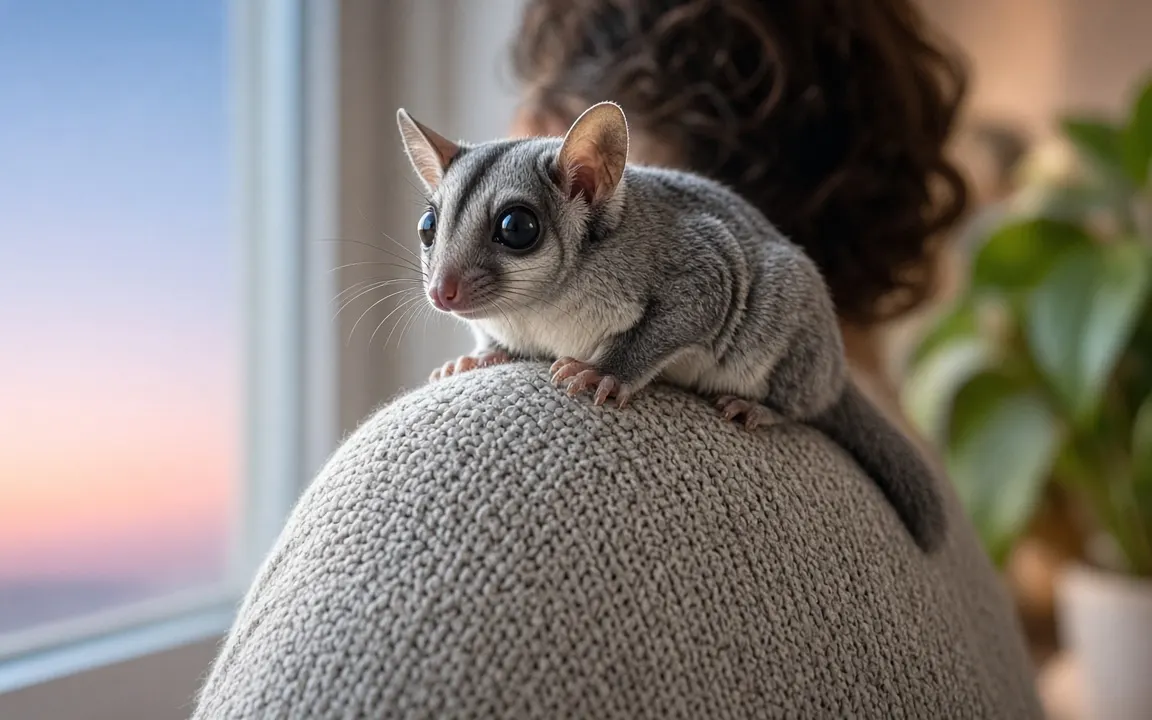
Right now
What should you do in the first hour after your glider dies?
First, make sure. Then move your glider somewhere cool, and ring the exotic vet before you commit to anything that can't be undone. Those three steps keep every option open: a necropsy, a private cremation, preservation or a quiet burial.
Making sure matters more with gliders than with most pets. A chilled or underfed sugar glider can drop into torpor, a deep, cold state where breathing slows so much it's hard to see. If your glider is cool and limp but you found them in a cold room or pouch, hold them against your skin or a warm (not hot) towel for 15 to 20 minutes and watch the flanks and whiskers closely. If you're unsure, the vet can confirm in seconds.
- Minutes 0 to 20: confirm death gently. Note the time and anything unusual you saw earlier: not eating, hind legs dragging, a fall, diarrhea.
- Minutes 20 to 60: wear gloves or wash your hands afterwards. Wrap your glider loosely in a paper towel, place them in a zip bag, press out the air and put that bag inside a small lidded box.
- Within the first hour: put the box in the fridge unless you've already decided on freeze-drying (see the table below). Photograph the cage as it was, including the food dish, if you think a vet might ask.
- Same day: call your exotic vet. Ask whether they recommend a necropsy and which local crematory has taken gliders from them before.
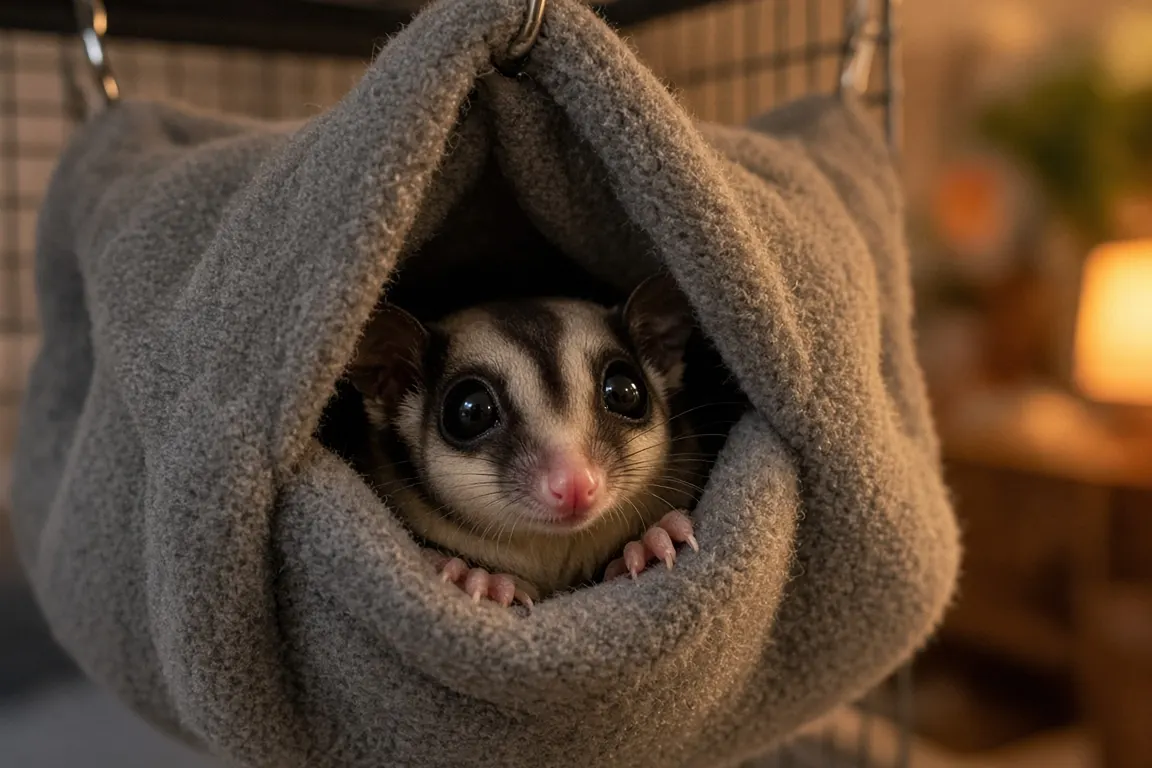
Storage
Fridge or freezer: which one depends on what happens next?
A glider's body is tiny, so it cools quickly and also changes quickly in a warm room. Where you store it should follow your plan, and if you don't have a plan yet, the fridge is the safer default for the first day because it doesn't close any doors.
| Your goal | Where | For how long | Why |
|---|---|---|---|
| Find out the cause (necropsy) | Fridge | Aim for the vet within 24 to 48 hours | Freezing creates ice crystals that damage the tissue a pathologist needs |
| Private or communal cremation | Fridge or freezer | Fridge 1 to 2 days; freezer for weeks | Freezing buys time to find a provider who handles tiny pets well |
| Freeze-drying or taxidermy | Freezer, promptly | Until the studio collects | Preservation artists want tissue frozen early, not chilled for days |
| Home burial | Fridge | A day or two | Gives you time to dig, check local rules and gather family |
The glider who's still here
How do you help a surviving cagemate through the loss?
Sugar gliders live in colonies, sleep in a heap and groom each other constantly, so the one left behind loses warmth, scent and routine all at once. Many keepers, and some exotic vets, suggest letting the survivor see and sniff the body for a few minutes before you take it away. The idea is that the companion then isn't left searching the cage. It isn't proven, and it's not for every situation: if the death was sudden and could be infectious, ask your vet first and skip it if they advise against.

Then watch. A healthy glider eats roughly 15-20%[2] of their body weight every day, so a survivor who stops eating runs into trouble quickly. Weigh them on a kitchen scale in grams each morning for two weeks and write it down. A steady drop is a reason to call the vet, not wait.
- Eating: leftovers in the dish, or favorite treats refused.
- Behavior: constant crabbing or calling at night, hiding all day, or pacing the cage walls.
- Grooming: bald patches, over-grooming or any chewing of the tail, legs or genitals. Self-injury in a stressed glider is an emergency, so call the vet the same day.
- Contact: more pouch time with you helps many survivors. Carry them in a bonding pouch while you're at home, and keep feeding and lights-out times the same.
Talk to your exotic vet about whether and when to introduce a new companion. A rushed introduction can cause fights, and a new glider should be quarantined first. There's no fixed rule on timing, so let the survivor's health and eating guide it.
Finding out why
Is a necropsy worth it for a sugar glider?
Often, yes, particularly if you keep other gliders. Iron storage disease and metabolic bone disease are among the leading fatal conditions in pet sugar gliders[2], and both are tied to diet. A necropsy (an animal post-mortem) can show whether the food your whole colony eats needs changing, or whether an infection means the others should be seen.
Exotic animals are a routine part of pathology work. At the University of Tokyo's veterinary school, exotics made up 20.5%[3] of necropsy cases over 15 years. Your vet may do a basic examination in-house or send the body to a diagnostic lab, and the fee varies, so ask for it in writing first. Also ask them to release the body to your chosen crematory afterwards; a gentle necropsy doesn't rule out a private cremation.
Would you want a necropsy (an animal post-mortem) before cremation?
Tap an answer to vote and see how others answered. Anonymous.
If you choose cremation
What does cremation look like for a 100-gram body?
Cremated remains usually weigh about 3-5% of body weight[4]. For a 120 g glider that's roughly 3.5 to 6 grams: pale, fine fragments that fill well under a teaspoon. Some gliders return a little less, because their bones are so fine. The ashes weight estimator works it out for your glider's last recorded weight.

Free tool
Ashes weight estimator
See roughly how much ash to expect back, by species and body weight.
For a body this small, one question matters most: how will they keep the remains separate? Look for a provider who places tiny pets on a small metal tray or in a dedicated small-animal chamber, so fragments aren't lost among the chamber bricks. How a private cremation differs from a communal one is worth reading before you choose, and what happens during an exotic pet cremation walks through each stage.
communal $45-75; private $100-175[5]
If your pet is very small, what matters most about the ashes?
Tap an answer to vote and see how others answered. Anonymous.
Small things to hold on to
Which keepsakes can you save before the body leaves home?
Some of the most meaningful glider keepsakes have to be gathered before cremation, so take a moment for them now. None of them need special skill.
- Their sleeping pouch. Put one pouch, unwashed, in a sealed bag. Many keepers find the scent comforting for weeks. Wash the rest before a surviving glider uses them again.
- A lock of fur. Snip a small tuft from the back or the fluffy base of the tail with nail scissors, and keep it in a tiny glass vial or folded paper.
- Footprints. Glider feet are small and grippy, so ink prints can smudge. A crematory's paw-print service may not be set up for a hand this size, so ask before paying.
- The food dish or a favorite toy, kept exactly as it was.
Because the ashes are so few, match the container to them. Ashes-in-glass pieces use only about 1/8–1/2 tsp[6] of remains, which suits a glider well, and one retailer lists keepsake urns at roughly $15–$60[7]. The urn size calculator will show how much room you need, and there are more ideas in our memorial ideas for exotic pets.

Free tool
Urn size calculator
Find the urn volume you need from your pet's weight, plus keepsake and sharing options.
If you'd rather bury
Can you bury a sugar glider at home?
In many places, yes, on land you own, but check first: some cities and most rental agreements restrict it. A small body is easy for dogs, foxes or raccoons to dig up, so go deeper than seems necessary for its size and lay a paving stone or heavy flat rock on top. Choose a spot well away from wells, streams and vegetable beds.
If your glider was put to sleep, the euthanasia drug stays in the body and can poison an animal that digs it up. Since 2003[8], US drug labels have warned that euthanized animals need deep burial or cremation for exactly this reason, so ask your vet whether home burial is sensible. Our guide to aftercare rules and permits covers local burial law in more detail.
If you bury at home, mark the spot; by our estimate from three US sellers, an engraved garden stone starts at about $39[9]. Choose a place away from wells and streams: England's animal burial guidance sets no minimum rules for small pets buried at home, though it asks for 1 m of clearance above the water table for larger animals, and if your glider was put to sleep, the drug warning summarized by Cornell's Waste Management Institute is a reason to dig deep rather than shallow. Our services page and your local page cover cremation instead, and the poll results show what other glider keepers chose.
Afterwards
Why losing a glider can hurt more than people expect
Gliders bond through scent and touch, and many ride around in a pouch against your chest for years. That closeness is what makes the loss sharp. In the UK, 66.9%[10] of bereaved owners said they were surprised by how intense their grief was, and research comparing pet and human loss points to closeness, not species, as the thing that predicts how hard it hits[11].
What was the hardest part of losing your pet?
Tap an answer to vote and see how others answered. Anonymous.
Our piece on grief after losing an exotic pet has ideas that fit quieter, smaller losses. When you're ready to arrange things, send us your glider's weight and your town and we'll email back providers near you who handle pets this small, with their prices in writing.

Reader polls
What would you choose?
Vote anonymously and see how other readers answered. The results are live counts from people who visit this site, so they show real opinions, not a scientific sample.
If your pet is very small, what matters most about the ashes?
Tap an answer to vote and see how others answered. Anonymous.
Would you want a necropsy (an animal post-mortem) before cremation?
Tap an answer to vote and see how others answered. Anonymous.
What was the hardest part of losing your pet?
Tap an answer to vote and see how others answered. Anonymous.
Questions people ask
How do I know if my sugar glider is dead or in torpor?
A glider in torpor is cold and very still, but warming them slowly against your skin or a warm towel for 15 to 20 minutes usually brings back visible breathing, whisker twitches and some response to touch. Stiffness that doesn't ease, eyes that stay dull and open, and no breathing after warming point to death. If there's any doubt, take them to your vet, who can check the heartbeat.
How long can I keep my sugar glider's body in the fridge?
One to two days is a sensible limit, and sooner is better if you want a necropsy, because tissue changes even when chilled. If you need longer to find a crematory or decide what to do, and you don't need a necropsy, move the sealed bag to the freezer. A frozen glider keeps well for weeks.
Should I let my other sugar glider see the body?
Many keepers and some exotic vets suggest a few minutes of seeing and sniffing, on the view that it stops the survivor searching for a missing companion. There's no firm evidence either way. If the death was sudden or might be contagious, check with your vet before letting them near the body.
Can a sugar glider die of loneliness after a cagemate dies?
Loneliness itself isn't a diagnosis, but stress in a lone glider can lead to real problems: not eating, weight loss and self-injury. That's why daily weighing and extra contact matter in the weeks after a loss. If you notice weight dropping or any over-grooming, call your exotic vet promptly rather than waiting to see if it passes.
How much does it cost to cremate a sugar glider?
Most crematories charge a glider their lowest weight-band price, because the band usually starts at 10 or 30 lb. In the US that band typically runs communal $45-75; private $100-175[5]. Pickup, a keepsake urn or a certificate can add to it, so ask for a written, itemized total before you agree.
Will I get any ashes back from a sugar glider?
With a genuinely private cremation and a provider who uses a small tray, you should get back a few grams, usually well under a teaspoon. Ask the provider directly what they expect to return for a pet of your glider's weight and how they keep fine remains from being lost. An honest provider will tell you before you pay.
Keep reading

Aftercare options for small exotics
Individual cremation, necropsy first, preservation and more.

Estimate your glider's ashes
Enter a weight in grams and see a realistic range.

Grief after an exotic pet dies
For losses other people may not understand.

Ask about providers near you
Send your glider's weight and town; we reply by email.
Sources and our estimates
- [1] Pet sugar gliders live about 9-12 years; adults weigh about 85-170 g. Merck Veterinary Manual - Table: Sugar Gliders at a Glance.
- [2] Sugar gliders eat about 15-20% of their body weight in food daily, and iron storage disease and metabolic bone disease are leading fatal conditions. Merck Veterinary Manual - Overview of Sugar Gliders.
- [3] At the University of Tokyo, exotic animals made up 20.5% of necropsy cases in 2006-2020, and the median age at death of necropsied dogs rose from 2 years (1903-1914) to 10 years. Nakayama H et al. Chronological transition of necropsy cases of animals in Tokyo, Japan. J Vet Med Sci, 2023 (PMID 36385043), 2023.
- [4] Embrace notes cremated remains typically weigh about 3-5% of the pet's original body weight. Embrace Pet Insurance - Bury or Cremate Your Dog? Costs, Pros & Cons, 2025.
- [5] CareCredit's pet cremation guide lists US communal cremation at $45-$75 and private at $100-$175 for pets up to 30 lb. CareCredit (Synchrony) - How Much Does Pet Cremation Cost? (Sept 2023), 2023.
- [6] Ashes-in-glass pet memorials use only about 1/8 to 1/2 teaspoon of ashes. Funeral.com – Ashes in Glass for Pets, 2026.
- [7] Keepsake or mini pet urns cost about $15–$60, versus $25–$100 for small and $40–$200 for medium urns (Memorials.com). Memorials.com – Pet Urn Cost Guide, 2025.
- [8] Since 2003 the FDA has required euthanasia drug labels to warn that euthanized animals must be disposed of by deep burial, incineration or another approved method to keep scavenging wildlife from eating the carcass. Cornell Waste Management Institute & Penn State - Horse Mortality: Carcass Disposal Alternatives (2012), 2003.
- [9] Engraved pet garden stones start at about $39 at the median of three US sellers. Our estimate: median of starting prices [$38 Adirondack, $38.95 Memorials.com, $89.99 Comfort Co.]. How we calculate.
- [10] 66.9% of respondents were surprised by how intense their grief was after losing a pet. RSPCA — Pet Loss Survey Results, 2026.
- [11] A Death Studies paper comparing pet and human loss found closeness to the deceased was overwhelmingly the strongest predictor of grief severity, whatever the species. Europe PMC abstract — Eckerd, Barnett & Jett-Dias, 'Grief following pet and human loss: Closeness is key', Death Studies (2016), doi:10.1080/07481187.2016.1139014, 2016.
Find a provider who handles sugar gliders
Tell us what you need and where you are. We'll reply by email with clear options and prices so you can decide in your own time.