Exotic Companions
Contact our team

What exotic pet keepers are choosing, as the votes come in

In one large US survey of dog and cat owners, past aftercare decisions split 68% cremation; 32% burial[1]. These live polls show whether keepers of unusual species see it the same way.

  • Live totals, updated with every vote
  • Set beside published research where it exists
  • Anonymous and one vote per person

Get options for your own pet

Poll results are a guide, not a plan. Tell us about your pet and we'll email real choices near you.

Free, no obligation and no phone calls. We reply by email. Privacy

Or email info@exotic-pet-cremation.online

What exotic pet keepers are choosing, as the votes come in

Before you look

How these results are counted, and what they can't show

Every result below is live. Each visitor can vote once per poll, votes are anonymous, and the totals change as new votes arrive. There's no weighting, no editing and nothing pre-filled: what you see is exactly what readers chose.

That also means the results describe the people who voted here, not every exotic keeper. People reach this site when they're making a decision, so the mix leans towards keepers who are grieving or planning. If a poll has only a handful of votes, treat it as an early hint rather than a pattern.

Live results

Which unusual companion are you planning for, or saying goodbye to?

A sugar glider0%
A hedgehog0%
A tarantula, scorpion or other invertebrate0%
An axolotl, frog or other amphibian0%
Something bigger: a skunk, wallaby, primate or large bird0%
Something else most people haven't heard of0%

Loading...
Has a pet crematory ever hesitated over, or turned down, your species?

Yes, they said no outright0%
They hesitated or had to check0%
No, they took it in their stride0%
I haven't asked anyone yet0%

Loading...

Would you want a necropsy (an animal post-mortem) before cremation?

Yes, I need to know what happened0%
Only if it could help my other animals0%
No, I'd rather they were left in peace0%
I didn't know that was possible for my species0%

Loading...

If your pet is very small, what matters most about the ashes?

Getting back anything at all, even a pinch0%
An honest answer before I pay0%
A container small enough to suit them0%
Knowing they were cremated alone matters more than the ashes0%

Loading...

Have you thought about preservation instead of, or as well as, cremation?

Yes, freeze-drying0%
Yes, resin or a display case (invertebrates)0%
Yes, traditional taxidermy0%
Just a part, like quills or a shed molt0%
No, cremation feels right0%

Loading...

Did your species need a permit or paperwork while alive?

Yes, a state or local permit0%
Yes, CITES or protected-species records0%
No paperwork at all0%
I'm honestly not sure0%

Loading...

How far is your nearest vet who treats your species?

Under 30 minutes away0%
About an hour0%
Two hours or more0%
I don't have one I trust0%

Loading...

What would you most want to keep from your exotic pet?

Their ashes, however little0%
Something they left behind: a molt, quills or a shed skin0%
A foot or hand print0%
A piece from their enclosure0%
Photos and video are enough0%

Loading...

Context

How the polls compare with published pet aftercare research

There's almost no published research on what exotic keepers choose, so the closest benchmarks come from dog and cat owners. Those are useful as a reference point. If exotic keepers vote very differently, that difference is itself interesting.

40.4% cremation; 34.9% home burial; 1.9% aquamation[2]

Asked their preferred future after-death care, 40.4% of US owners chose traditional flame cremation and 34.9% home burial; 10.7% chose cemetery burial and 1.9% alkaline hydrolysis (aquamation).

~2/3 cremation; ~30% burial[3]

UK and US survey evidence converges on roughly two-thirds of bereaved owners choosing cremation (UK 67%; US 68% ever) and about 29-32% choosing burial.

~7%[4]

About 7% of pet owners choose taxidermy, per Astute Analytica.

Asked about future plans, US dog and cat owners split mainly between flame cremation and home burial, with water cremation still rare. Across the UK and US, roughly two-thirds of bereaved owners choose cremation. Taxidermy remains a small niche overall. Compare those figures with the "If you had to decide today" poll and the preservation poll here, where keepers of display animals may lean differently.

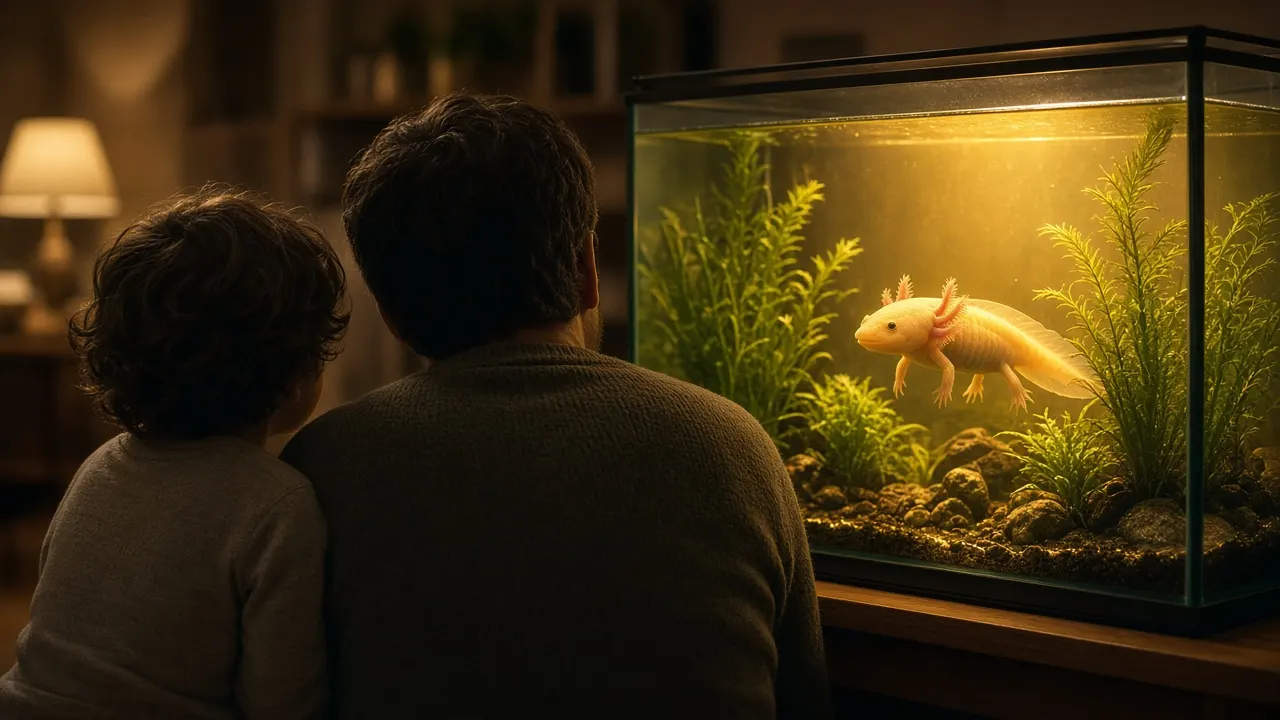
A child and parent watching a golden axolotl in a home aquarium in soft evening light
Behind every vote is a keeper who knew their animal closely.

Reading the exotic polls

What to look for in the exotic-specific results

  • Which species voters keep. This tells you who's answering the other polls. If most voters keep hedgehogs, the necropsy and keepsake results mostly reflect hedgehog keepers.
  • Whether providers hesitated. A high share of "they said no" or "they had to check" is a reminder to call more than one provider early.
  • Necropsy interest. Compare it with the reality that exotics made up 20.5%[5] of necropsy cases at one university service. Interest may be higher among keepers with several animals.
  • Tiny ashes. If voters value an honest answer over the ashes themselves, that's a useful signal for anyone deciding between private and communal cremation.

If your pet is very small, what matters most about the ashes?

Tap an answer to vote and see how others answered. Anonymous.

If the results leave you unsure what ash to expect, the ashes weight estimator gives a range for your pet's weight, and the private vs communal guide for exotics explains the trade-off.

A different kind of keeper

Why exotic keepers might vote differently from dog and cat owners

There are good reasons to expect differences. Many exotic pets are display animals, admired as much as handled, which may make preservation feel more natural. Very small bodies leave little ash, which weakens the main reason people pay for private cremation. And keepers often manage several animals, so a necropsy can protect the rest of the group.

Exotic keepers also tend to see the end coming. Hedgehogs, for example, have short lives and a high cancer burden: 80%+[6] of reported hedgehog tumours are malignant. Anticipatory grief is common across all pet owners, reported by 75.4%[7] in one UK survey, and long illnesses give keepers time to form clear views on aftercare.

If you want to see what those differences mean for cost, the aftercare options comparison ranks each choice by the priorities you set.

The harder questions

Grief results, and why they matter for exotic keepers

The grief polls are shared across our network, so you can see exotic keepers' answers alongside everyone else's. Published research suggests the loss can be as heavy as losing a person: 40%[8] of owners in one industry report said their grief matched or exceeded a human loss.

Exotic keepers may find the loss harder to share, because fewer people understand the bond. If the results show that many others found the first weeks hardest, or that routine was what they missed most, you're in good company. Our grief page for exotic keepers has practical ideas.

Compared with losing a person, losing your pet felt...

Tap an answer to vote and see how others answered. Anonymous.

Scaled up, our estimate is that roughly 850,000 bereaved US pet households a year may not find the grief support they need[9], applying the 56.7% figure from the RSPCA's bereavement survey to US pet cremation numbers. A 2026 PLOS ONE study of pet bereavement adds that 7.5% of people grieving a pet met the criteria for prolonged grief disorder. If your answers here point to a decision you haven't made yet, our services page and local pages are the practical next step.

From results to decisions

What to take away, and what to do next

Poll results can reassure you that your instinct isn't unusual, or show you a path you hadn't thought about. They can't tell you what's right for your animal, your budget or your local rules. For that, you need real options and real prices.

Vote in any polls you haven't answered on the polls page, compare costs with the cremation cost calculator, or send us your pet's details and we'll email back providers near you who can help.

Reader polls

What would you choose?

Vote anonymously and see how other readers answered. The results are live counts from people who visit this site, so they show real opinions, not a scientific sample.

Have you thought about preservation instead of, or as well as, cremation?

Tap an answer to vote and see how others answered. Anonymous.

Would you want a necropsy (an animal post-mortem) before cremation?

Tap an answer to vote and see how others answered. Anonymous.

If you had to decide today, which aftercare would you choose for your pet?

Tap an answer to vote and see how others answered. Anonymous.

Questions people ask

How often do the results update?

Continuously. Each new vote is added to the totals straight away, so the percentages you see can change between visits, especially on polls with fewer votes. There's no delay or editing between a vote being cast and it appearing in the results.

Why do some polls have very few votes?

Exotic pet keepers are a small community, and some questions, like whether a species needed a CITES certificate, only apply to a few readers. Low-vote polls are still worth a look, but a single vote can move the percentages a lot, so read them as early signals rather than settled patterns.

Can I change my vote?

Votes are anonymous and counted once per person, so they can't be edited after you submit. If your situation changes, for instance you've since chosen preservation, your original vote still reflects how you felt at the time, which is useful information for other keepers too.

Are these results used to recommend providers?

No. Poll results are shown for interest and reassurance only. When you send us a request, we look for providers based on your species, size and location, not on how other readers voted.

Do the results include keepers outside the US?

Yes. Anyone who reaches the site can vote, wherever they live, and we don't record location with a vote. Most published aftercare research we compare against comes from the US and UK, so keep in mind that rules on keeping exotic species, and the choices open to keepers, differ a great deal from country to country.

Sources and our estimates

  1. [1] In a US survey of 2,043 dog and cat owners who had made end-of-life decisions, 68% had made a cremation decision and 32% a burial decision for at least one past pet. Cooney, Kogan, Brooks, Ellis - Pet Owners' Expectations for Pet End-of-Life Support and After-Death Body Care, Topics in Companion Animal Medicine (2020), 2020.
  2. [2] Asked their preferred future after-death care, 40.4% of US owners chose traditional flame cremation and 34.9% home burial; 10.7% chose cemetery burial and 1.9% alkaline hydrolysis (aquamation). Cooney, Kogan, Brooks, Ellis - Pet Owners' Expectations for Pet End-of-Life Support and After-Death Body Care, Topics in Companion Animal Medicine (2020), 2020.
  3. [3] UK and US survey evidence converges on roughly two-thirds of bereaved owners choosing cremation (UK 67%; US 68% ever) and about 29-32% choosing burial. Our estimate: mean(67, 68) = 67.5; burial range 29% (UK) to 32% (US). How we calculate.
  4. [4] About 7% of pet owners choose taxidermy, per Astute Analytica. Astute Analytica via GlobeNewswire — Global Pet Preservation Services Market to Hit USD 112.7 Million by 2032 (Apr 2, 2024), 2024.
  5. [5] At the University of Tokyo, exotic animals made up 20.5% of necropsy cases in 2006-2020, and the median age at death of necropsied dogs rose from 2 years (1903-1914) to 10 years. Nakayama H et al. Chronological transition of necropsy cases of animals in Tokyo, Japan. J Vet Med Sci, 2023 (PMID 36385043), 2023.
  6. [6] More than 80% of tumors reported in pet hedgehogs are malignant; most are found in hedgehogs over 3 years old. Merck Veterinary Manual - Diseases of Hedgehogs.
  7. [7] 75.4% of RSPCA pet-loss survey respondents experienced anticipatory grief before their pet died. RSPCA — Pet Loss Survey Results, 2026.
  8. [8] Mordor Intelligence reports that 40% of owners say their grief after a pet's death equals or exceeds grief after a human loss. Mordor Intelligence — Pet Funeral Services Market report page, 2025.
  9. [9] Roughly 850,000 bereaved U.S. pet households a year may not find the grief support they need. Our estimate: 1.5M pet cremations x 56.7% couldn't find support. How we calculate.

Get options for your own pet

Tell us what you need and where you are. We'll reply by email with clear options and prices so you can decide in your own time.

Get my options

Free, no obligation and no phone calls. We reply by email. Privacy

Or email info@exotic-pet-cremation.online