Can you cremate a tarantula? Yes, but here's what to expect
A provider can cremate a tarantula, but there are no bones, and the chitin exoskeleton burns away in a chamber running at 1,200 °F+[1], so there's usually nothing to return. That's why many keepers choose resin, a display case, the last molt or a planter burial instead.
By the Exotic Pet Cremation Services editorial team · Updated September 24, 2026 · 6 min read · Sources
- How to tell death from a molt before you touch anything
- Safe handling for urticating hairs and stingers
- Honest alternatives, from resin to the last molt
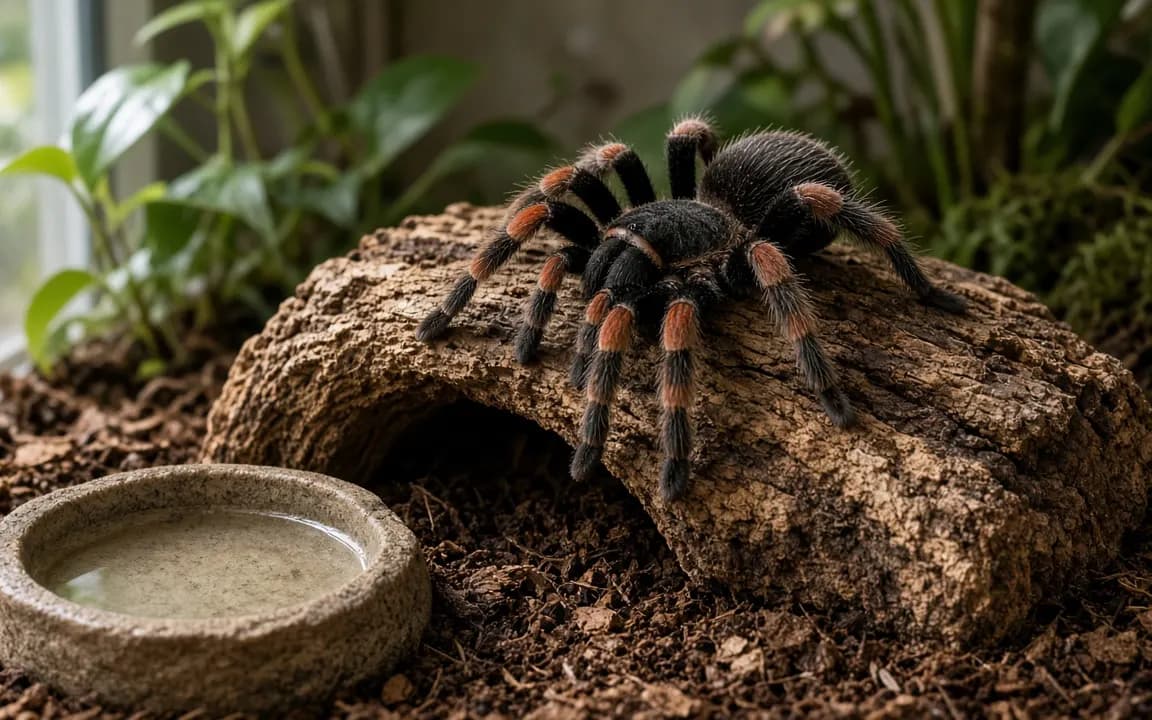
The short answer
Can a tarantula actually be cremated?
Yes. A pet crematory can place a tarantula in the chamber like any other animal, and some keepers want exactly that. But a spider has no bones. Its outer skeleton is chitin, a tough material related to cellulose, and the soft tissue inside is mostly water, so at cremation temperatures almost everything becomes gas and water vapor. In most cases there is nothing a provider can sweep up and return.
Ashes from vertebrates are mostly bone and weigh roughly 3-5% of body weight[2]. With no bone to begin with, that rule simply doesn't apply to a tarantula, a scorpion or a beetle. So the real question isn't whether it can be done, but what you want at the end: a ritual, something to look at, or a place to visit.
Have you thought about preservation instead of, or as well as, cremation?
Tap an answer to vote and see how others answered. Anonymous.
Before you do anything
Is your tarantula dead, or getting ready to molt?
This is the question to settle first, because a molting tarantula looks alarming and is completely helpless. A tarantula lying on its back is almost always molting, not dying. It flips over to push out of the old skin, which can take many hours. Don't touch it, don't add live food, and keep the enclosure quiet until the new skin has hardened, usually a week or more.
- Signs of pre-molt: refusing food for weeks, sealing itself in its hide with silk, sluggishness, and a bald patch on the abdomen turning dark.
- The death curl: legs drawn tightly underneath while the spider sits upright. It often means death, but a badly dehydrated or dying spider can curl while still alive.
- If it's curled but you're unsure: place a shallow water dish right beside it, leave it undisturbed for a day, and watch for any leg movement or change in position.
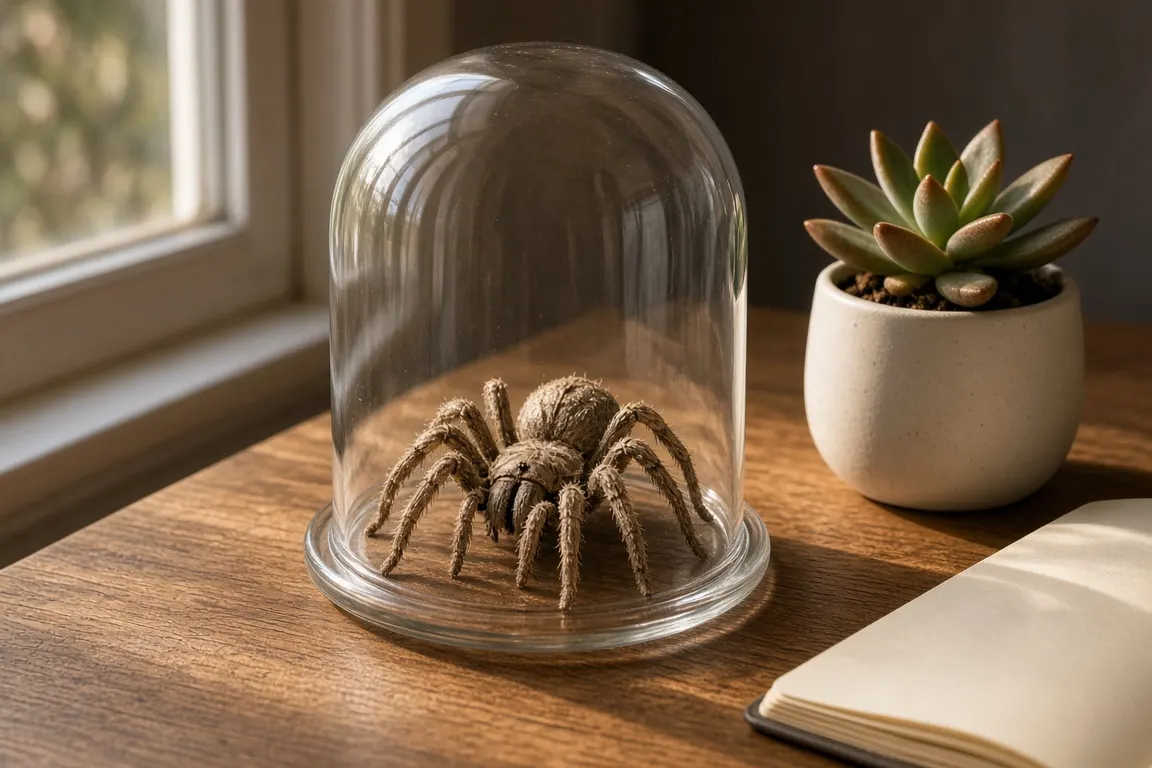
Safety
How do you handle a dead tarantula or scorpion safely?
New World tarantulas, such as the Brachypelma and Grammostola species many people start with, carry urticating hairs on the abdomen. These still come loose after death and can cause itching, rashes or real eye irritation. Wear disposable gloves, keep the spider away from your face, and lift it with long soft-tipped tweezers or by sliding a card underneath. Old World species don't have these hairs, but the fangs stay sharp.
Scorpions need the same care for a different reason: the stinger remains sharp and can still carry venom, so handle with forceps, never fingers. Put the body in a small, rigid container so nothing crushes it, then seal that in a bag.
If you might preserve it
Should you freeze a tarantula for resin or pinning later?
If there's any chance you'll want a resin piece or a display, freeze it promptly. Put it in an airtight container with a folded paper towel so it doesn't stick, and label it. The legs and carapace hold their shape well, but the abdomen is soft and shrinks or darkens as it dries, so freezing early gives an artist the most to work with.
Before you send anything, ask how the artist handles the abdomen, how long the work takes and whether they've done your species before. Some keepers do the drying and pinning themselves; others prefer a professional. Our resin and display memorials guide covers both routes.
What many keepers choose
What can you do instead of cremating a tarantula?
| Option | What you keep | Rough cost | Good to know |
|---|---|---|---|
| Resin block or dome | The spider, set in clear resin | Ask the artist for a quote | Abdomen may need work; curing takes time |
| Pinned display or shadow box | The spider, dried and framed | Ask the artist, or do it yourself | Suits beetles and mantises especially well |
| Keep the last molt | A perfect shed copy | Just a frame or dome | No need to handle the body at all |
| Freeze-drying | The whole spider, posed | About USD 650 for pets under 1 lb at one studio | Check the studio takes invertebrates |
| Planter burial | A living plant | The cost of a pot and plant | Keeps the grave where you can see it |
| Communal cremation | The knowledge it was done | Usually the provider's lowest price | Nothing comes back |
The last molt is the option people most often overlook. A tarantula's shed skin includes the fang covers, the leg hairs and even the lining of the book lungs, and once cleaned and dried it looks almost exactly like the living spider. Freeze-drying exists too, and one US studio charges USD 650[3] for a pet under a pound, though you'd need to confirm they accept invertebrates.
A planter burial is simple and lovely: a deep pot, the spider in a little cotton or paper, and a plant chosen for its species' home, perhaps a small succulent for a desert species. The memorial budget planner helps you total any of these, and our memorial ideas for exotic pets has more.

Free tool
Memorial budget planner
Add up cremation, urn, keepsakes and a farewell so the total holds no surprises.
Not just spiders
What about scorpions, mantises, beetles, isopods and millipedes?
- Scorpions glow under UV light, and they keep glowing after death, so don't rely on fluorescence to judge. Their thicker exoskeleton makes them good candidates for resin.
- Mantises are short-lived; many species live under a year. They pin beautifully, and some keepers also keep an egg case the female laid.
- Beetles have hard wing cases that barely change as they dry, which is why they're the classic display specimen. A shadow box suits them well.
- Isopods live in colonies and often break down a dead member themselves, so an individual memorial is rare. A favorite morph can be dried and kept in a small vial.
- Millipedes can release defensive chemicals that stain skin brown, even after death. Use gloves, and wash your hands if you touch one.
None of these return meaningful ash either. If you're weighing options across several animals, the aftercare options comparison lays out cost, time and what you keep.

Free tool
Aftercare options compared
Compare private, communal and water cremation with burial on cost, timing and what comes home.
If you still want cremation
What should you ask a provider who offers a private cremation?
Wanting your spider cremated alone, with care, is a perfectly good reason to ask for it. Just make sure you know what you're paying for. Most crematories bill even the smallest pet at their lowest weight-band price, which in the US typically runs communal $45-75; private $100-175[4]. Communal cremation, where nothing is returned anyway, is often far cheaper: UK regulators found it 2x to 5x cheaper[5] for the same weight.
- Have you cremated an invertebrate before, and what did you return?
- If there's nothing to collect, will you tell me before I pay for a private service?
- Do you offer a symbolic return, such as a certificate or an empty keepsake with a note?
- Can I be present, or receive a photo of the placement, if that matters to me?
More questions are in our questions to ask an exotic cremation provider, and private versus communal cremation for exotics explains the difference in detail. Or send us the species and your area and we'll find providers who'll answer honestly.
If your pet is very small, what matters most about the ashes?
Tap an answer to vote and see how others answered. Anonymous.
Private cremation for an invertebrate is priced like any small pet. Our calculation from US price bands puts private cremation at roughly $9 a pound for a 15 lb animal[6], and a spider weighing a few grams pays the whole minimum fee. The familiar ash rule of 3 to 5% is built around vertebrates: the closest measurement, a study of 100 human cremations, weighed what is mostly bone mineral, and a tarantula has no bones. National Geographic's explainer on cremation notes chambers run at 1,200 °F or more, at which an exoskeleton burns away almost entirely. Check who will take one on your local page or our services page.
It still counts
Grieving a pet you rarely held
Tarantula keepers often care for one animal for a decade or more, with years of feeding, rehousing and watching molts. Even so, many hear that it was only a spider. In a UK survey, 34.5%[7] of bereaved owners had been told it was just a pet. Your attention and knowledge were a real form of care, and missing that routine is normal. Our page on grief after an exotic pet dies may help.

Reader polls
What would you choose?
Vote anonymously and see how other readers answered. The results are live counts from people who visit this site, so they show real opinions, not a scientific sample.
Have you thought about preservation instead of, or as well as, cremation?
Tap an answer to vote and see how others answered. Anonymous.
If your pet is very small, what matters most about the ashes?
Tap an answer to vote and see how others answered. Anonymous.
Which memorial feels most like your pet?
Tap an answer to vote and see how others answered. Anonymous.

Questions people ask
Do tarantulas leave ashes?
Almost never. Ashes are the minerals left from bone, and tarantulas have no bones. Their chitin exoskeleton and soft tissue burn away almost entirely, leaving nothing a provider can reliably collect. A large spider may leave a faint trace at most. If getting something back matters to you, a resin piece or the last molt is a better choice.
Why is my tarantula on its back?
Almost certainly because it's molting. Tarantulas flip over to shed their old exoskeleton and can lie still for hours before and during the process. Don't touch it or add food, keep the room calm, and wait. A tarantula that has died usually sits upright with its legs curled underneath, not on its back.
Can I keep my dead tarantula in the freezer?
Yes, and it's a good idea if you might want a resin piece or display later. Use an airtight container with a paper towel inside, label it, and freeze promptly. A frozen tarantula keeps well for months, which gives you time to find an artist. Wear gloves when handling New World species because of their urticating hairs.
How much does it cost to preserve a tarantula?
It depends on the method and the artist. Resin and pinned displays are priced individually, so ask for a written quote and photos of past work. Freeze-drying for pets under a pound costs about USD 650 at one US studio, but check they take invertebrates. Keeping and framing the last molt costs almost nothing.
Is it okay to bury a tarantula in a plant pot?
Yes. A planter burial is one of the simplest invertebrate memorials. Use a deep pot, wrap the spider in paper or cotton, cover with plenty of soil, and plant something you'll enjoy. Avoid using the enclosure substrate if you suspect disease, and don't reuse that soil for other invertebrates.
Will a crematory accept a tarantula?
Many will, but some are unsure because they rarely see one. Give the species and approximate size, and ask plainly what, if anything, they expect to return. A good provider will tell you there may be nothing and suggest communal cremation or a memorial instead of charging for something that can't be delivered.

Sources and our estimates
- [1] Cremation heats bodies to 1,200 °F or more. National Geographic — The environmental toll of cremating the dead (2019), 2019.
- [2] Embrace notes cremated remains typically weigh about 3-5% of the pet's original body weight. Embrace Pet Insurance - Bury or Cremate Your Dog? Costs, Pros & Cons, 2025.
- [3] One U.S. pet preservation studio charges USD 650 to freeze-dry a pet under 1 lb, with a 4–6 month turnaround. Animal Family Pet — Pet Preservation Pricing & Shipping, 2026.
- [4] CareCredit's pet cremation guide lists US communal cremation at $45-$75 and private at $100-$175 for pets up to 30 lb. CareCredit (Synchrony) - How Much Does Pet Cremation Cost? (Sept 2023), 2023.
- [5] The CMA found communal cremations are two to five times cheaper than the individual equivalent for the same pet weight. UK Competition and Markets Authority - Final report Appendix K: Cremations pricing, mark-ups and costs (24 Mar 2026), 2026.
- [6] Private cremation cost per pound falls with size in the US: roughly $9.2/lb for a 15 lb pet, $4.2/lb at 60 lb and about $4.0/lb at 100 lb. Our estimate: band midpoint price / representative weight: 0-30 lb (midpoint $137.50 / 15 lb) = $9.17/lb; 51-70 lb ($250 / 60 lb) = $4.17/lb; over 90 lb ($400 / ~100 lb) = $4.00/lb. How we calculate.
- [7] 34.5% of bereaved pet owners were told 'it's just a pet'. RSPCA — Pet Loss Survey Results, 2026.
Ask about invertebrate memorials near you
Tell us what you need and where you are. We'll reply by email with clear options and prices so you can decide in your own time.