How to find a crematory that will take your exotic pet
Start with your exotic vet, then look to vet school hospitals, crematories that serve zoos and wildlife rehabilitators, and equine crematories for the largest animals. Nearly half of US owners, 48.8%[1], already rely on their vet team for this, and for exotic pets that instinct is usually right.
By the Exotic Pet Cremation Services editorial team · Updated September 24, 2026 · 5 min read · Sources
- Five places to look, in the order most likely to work
- How vet contracts can quietly narrow your choice
- How far it's reasonable to travel, by pet size

The short answer
Where should you start looking for an exotic-friendly crematory?
Work outward from the people who already handle unusual animals. Your exotic vet comes first, then veterinary teaching hospitals and pathology labs, then the crematories that zoos and wildlife rehabilitators use. For something as big as a wallaby or emu, add equine crematories. A plain online search comes last, because it mostly surfaces dog and cat services.
- Your exotic vet, or any vet who treats your species.
- A veterinary school teaching hospital or diagnostic lab in your state.
- Crematories used by zoos, aquariums and wildlife rehabbers.
- Equine or large-animal crematories, for wallabies, emus and other large exotics.
- Independent pet crematories found by phone, not just by website.
Once you have names, our questions to ask an exotic cremation provider covers what to say on the call. This piece is about getting to that shortlist.
Has a pet crematory ever hesitated over, or turned down, your species?
Tap an answer to vote and see how others answered. Anonymous.
Step one
Why is your exotic vet the most useful first call?
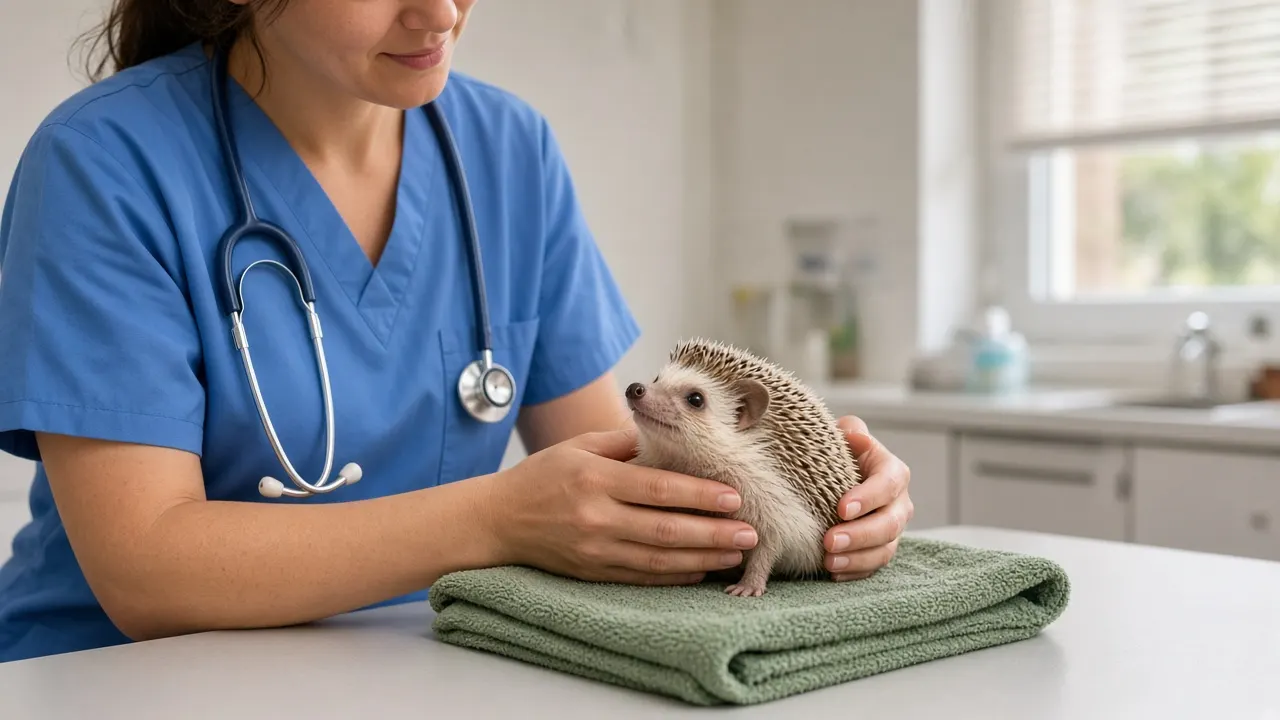
Because they've already solved this problem for other patients. A practice that sees gliders, hedgehogs and amphibians every week has sent bodies somewhere, and knows which crematory handled them well. Vets steer most of these decisions: in the UK, 78%[2] of cremation buyers bought through their vet or on its recommendation, and 48% named the vet's advice as an important factor in their choice, against 20% for price[3].
Don't expect to find the answer on the practice website. A US review found only 20.6%[4] of vet practice websites even mentioned after-death care. Ring and ask a specific question: "Which crematory has taken a sugar glider, or an animal this size, from you, and did the family get ashes back?" A named example tells you far more than a general reassurance.
How far is your nearest vet who treats your species?
Tap an answer to vote and see how others answered. Anonymous.
Step two
Can a vet school or pathology lab help you find one?
Often, yes, and they're an overlooked route if you don't have an exotic vet. Teaching hospitals see unusual species constantly, and their pathology services handle them after death. At the University of Tokyo's veterinary school, exotic animals made up 20.5%[5] of necropsy cases over 15 years, a sign of how normal these patients are in academic settings.
Call the hospital's client services or the diagnostic lab and ask which private crematory they use when a family wants ashes back. Be aware that many labs dispose of bodies themselves by incineration or digestion, with nothing returned, so if you use one for a necropsy, arrange the release to a crematory in writing before the body goes in.
Vet schools see more exotic cases than you might guess: at the University of Tokyo, exotic animals made up 20.5% of necropsy cases over 15 years. In the UK, the regulator's provisional decision report found most cremations are bought through or on the recommendation of the owner's vet, so asking a school's pathology team which crematory they use is a fair shortcut. Our services page and the poll results show what other exotic keepers looked for.
Step three
Which crematories serve zoos and wildlife rehabilitators?
Zoos deal with more species than any pet owner ever will. AZA-accredited facilities alone care for about 800,000 animals[6] across some 6,000 species, and their standards expect deceased animals to be necropsied[7]. The crematories and labs they work with are used to bodies from a few grams to several hundred pounds, and to the paperwork protected species bring.
Zoos don't always share supplier names, so a friendlier door is a licensed wildlife rehabilitator. Your state wildlife agency usually publishes a list. Rehabbers lose animals regularly and tend to know which local crematory will take a possum, a bat or an owl without fuss, and that same provider is often happy with a glider or a skunk.
Step four, for big animals
When is an equine crematory the right call?
For wallabies, emus, rheas and large primates, a horse or large-animal crematory may be the only place with a big enough chamber, lifting gear and a vehicle that can collect. A commercial pet cremator rated for large loads works at around 250 lb/hour[8], so an emu isn't a problem for them; what matters is whether they'll cremate it individually.
Ask whether a private cremation is available at that size, how they'll lift and position the body, and whether collection is included. The reverse also applies: a horse crematory may not be set up to recover a few grams from a glider, so keep this route for the big ones. Our transport and logistics guide covers moving a heavy body.
Know who you're dealing with
Independent crematories or the one your vet uses: does it matter?
It can. Many vet practices send every body to one contracted crematory. In the UK, 60%[9] of independent practices that answered regulators had an exclusive contract with a single crematorium. That's fine if the contracted provider handles exotics well, but it means "we'll take care of it" may not include asking whether anyone else would do better.
You can always choose your own provider and ask the vet to release the body to them. In the US, 43.2%[10] of owners who'd made cremation decisions preferred to work with a particular crematory, so this is a normal request. Oversight also varies: one directory counts only 9 states[11] with pet-crematory-specific statutes, and just two requiring written documentation to families[12]. Ask for your pet's details, the cremation type and the price in writing, wherever you live.
Why the internet doesn't help much
Why do so few exotic-friendly crematories show up online?
Partly because so few families search at all. Just 5% of UK cremation buyers found their provider through an online search, and 7% by word of mouth[13]. By our estimate just 3 to 4%[14] of all bereaved UK owners found one that way. Crematories write their websites for the dogs and cats that make up almost all their work, so a provider who happily takes hedgehogs may never say so online.
about 1,000[15]
There are about 1,000 pet crematories in the U.S., averaging about 1,500 cremations each per year (Foresight Companies, 2020).
96 sites; 7 of 30 offer communal[16]
The CMA counted 96 independent pet crematoria sites in the UK; of 30 websites checked, 21 published prices and only 7 offered communal cremation.
The US has about 1,000[15] pet crematories and the UK counted 96 independent sites, so there's usually more than one within reach. If you do search, try "small animal cremation" or "individual cremation" plus your county, then phone. Most people never compare: 89%[17] of UK buyers didn't. Two or three calls, and a check with the cremation cost calculator, will tell you whether a quote is reasonable.

Free tool
Cremation cost calculator
Estimate a realistic price range for your pet's size, location and the type of cremation.
Did you (or would you) compare more than one provider?
Tap an answer to vote and see how others answered. Anonymous.
Travel
How far is it reasonable to travel to the right crematory?
Further than you'd think for a small pet, because the freezer gives you time. A frozen glider or hedgehog in a cool box keeps well for a two- or three-hour drive, so the nearest provider doesn't have to be the one you use. If a crematory an hour further away uses a tray and has done your species before, that's usually worth the trip.
| Pet size | Examples | Reasonable reach | Main limit |
|---|---|---|---|
| Under 1 lb | Gliders, hedgehogs, amphibians | Several hours by car if frozen | Your time, not the body |
| 1 to 15 lb | Skunks, marmosets, kinkajous | One to three hours | Cooler size and keeping it cold |
| Over 15 lb | Wallabies, emus, large primates | Whatever the provider's collection area covers | Lifting and vehicle size |
If the search feels like too much right now, send us your pet's species, weight and town. We'll check with providers in your area and email back the ones who'll take your pet, with written prices. You can also browse providers by area or read how we choose who to recommend.

Reader polls
What would you choose?
Vote anonymously and see how other readers answered. The results are live counts from people who visit this site, so they show real opinions, not a scientific sample.
Has a pet crematory ever hesitated over, or turned down, your species?
Tap an answer to vote and see how others answered. Anonymous.
How far is your nearest vet who treats your species?
Tap an answer to vote and see how others answered. Anonymous.
Did you (or would you) compare more than one provider?
Tap an answer to vote and see how others answered. Anonymous.

Questions people ask
What do I do if a pet crematory refuses my exotic pet?
Ask why. If it's size, paperwork or uncertainty about ashes, another provider may be more experienced. Then ask your exotic vet which crematory they use for unusual patients, call a vet school or diagnostic lab, or contact a licensed wildlife rehabilitator. Freeze the body while you search, so you're not under time pressure.
Do vet schools cremate pets for the public?
Some teaching hospitals offer cremation or work with a private crematory for their clients, and many will tell you who they use. Policies differ, so call the hospital's client services. If they perform a necropsy, confirm in writing that the body will be released for private cremation, since labs often dispose of remains themselves.
Can I choose a different crematory from the one my vet uses?
Yes. Your vet may have a contract with one provider, but you can ask them to hold the body and release it to a crematory you choose, or collect it yourself. Tell the vet before they send the body anywhere, and ask your chosen provider whether they collect from vet clinics and what that costs.
Will a horse crematory cremate a wallaby or emu?
Many will, and they're often better equipped for large exotics than a small pet crematory, with bigger chambers and lifting gear. Ask whether they offer individual cremation, whether collection is included, and how they'll handle the body. Give the weight and nose-to-tail length when you call.
Is it worth driving a long way to a crematory for a small exotic pet?
Often, yes. A small body frozen and packed in a cool box travels well, so a longer drive to a provider who has handled your species can be worth it. Ask first whether they use a tray for tiny pets and what they expect to return, so the trip is for something you're confident in.


Sources and our estimates
- [1] 48.8% of US pet owners named their veterinary team as their primary resource for recommendations on pet death and dying. Cooney, Kogan, Brooks, Ellis - Pet Owners' Expectations for Pet End-of-Life Support and After-Death Body Care, Topics in Companion Animal Medicine (2020), 2020.
- [2] In total 78% of UK cremation buyers purchased through, or on the recommendation of, their vet or out-of-hours provider. UK Competition and Markets Authority - Veterinary services for household pets, Provisional decision report Part A (Oct 2025), 2025.
- [3] 48% of UK owners named their vet's recommendation as an important factor when choosing a cremation service, versus 26% for crematorium reputation/reviews, 26% for type of service and 20% for price. UK Competition and Markets Authority - Veterinary services for household pets, Provisional decision report Part A (Oct 2025), 2025.
- [4] Only 20.6% of reviewed US veterinary practice websites mentioned after-death body care (32% referenced euthanasia at all). Cooney, Kogan, Brooks, Ellis - Pet Owners' Expectations for Pet End-of-Life Support and After-Death Body Care, Topics in Companion Animal Medicine (2020), 2020.
- [5] At the University of Tokyo, exotic animals made up 20.5% of necropsy cases in 2006-2020, and the median age at death of necropsied dogs rose from 2 years (1903-1914) to 10 years. Nakayama H et al. Chronological transition of necropsy cases of animals in Tokyo, Japan. J Vet Med Sci, 2023 (PMID 36385043), 2023.
- [6] About 800,000 animals from roughly 6,000 species, including about 1,000 threatened or endangered species, live in AZA-accredited facilities; AZA had 238 accredited zoos and aquariums in 2025. Wikipedia - Association of Zoos and Aquariums (citing AZA), 2025.
- [7] AZA accreditation Standard 2.5.1 says deceased zoo animals should be necropsied to find the cause of death, with all deceased animals (or a sample from a mass mortality) given a gross necropsy supported by histopathology at veterinary discretion. Association of Zoos and Aquariums - 2023 Accreditation Standards & Related Policies (Standard 2.5 Necropsy), as filed in Skagit County public record, 2023.
- [8] A commercial pet crematory rated for 1,000 lb loads cremates at an average of about 250 lb per hour (manufacturer specification). B&L Cremation Systems (manufacturer) - BLP-1000 Pet Crematory specifications.
- [9] 60% of independent UK vet practices responding to the CMA had an exclusive contract with one crematorium. UK Competition and Markets Authority - Veterinary services for household pets, Provisional decision report Part A (Oct 2025), 2025.
- [10] Among US owners who had made cremation decisions, 43.2% preferred to work with a specific crematory. Cooney, Kogan, Brooks, Ellis - Pet Owners' Expectations for Pet End-of-Life Support and After-Death Body Care, Topics in Companion Animal Medicine (2020), 2020.
- [11] Nine US states have pet-crematory-specific licensing or consumer statutes: California, New York, Texas, Arizona, Virginia, Georgia, North Carolina, Maryland and Illinois. FindPetCremations - Pet Cremation Laws & Regulations by State (2026), 2026.
- [12] As of April 2026 only Illinois and Arizona mandated written documentation to consumers for pet cremation. FindPetCremations - Pet Cremation Laws & Regulations by State (2026), 2026.
- [13] Only 7% of UK cremation buyers chose a provider by word of mouth and 5% via online search. UK Competition and Markets Authority - Veterinary services for household pets, Provisional decision report Part A (Oct 2025), 2025.
- [14] Roughly 3-4% of all bereaved UK owners find their cremation provider through online search. Our estimate: 67% cremate x 5% chose via online search = 3.35%. How we calculate.
- [15] There are about 1,000 pet crematories in the U.S., averaging about 1,500 cremations each per year (Foresight Companies, 2020). The Foresight Companies — Industry Spotlight: The Pet Business (2020), 2020.
- [16] The CMA counted 96 independent pet crematoria sites in the UK; of 30 websites checked, 21 published prices and only 7 offered communal cremation. UK Competition and Markets Authority - Final report Appendix K: Cremations pricing, mark-ups and costs (24 Mar 2026), 2025.
- [17] 89% of UK owners who bought a pet cremation did not compare different providers; 9% did. UK Competition and Markets Authority - Veterinary services for household pets, Provisional decision report Part A (Oct 2025), 2025.
Let us find an exotic-friendly crematory for you
Tell us what you need and where you are. We'll reply by email with clear options and prices so you can decide in your own time.