Arranging exotic pet aftercare in Rosemount
Keepers of unusual pets in Rosemount often hear 'we don't do those' first. Here's how to find a yes, what it should cost and what will realistically come home.
- Local Rosemount costs before you commit
- Invasive-species-safe handling
- Options emailed to you, no pressure
Rosemount, Minnesota
Finding a provider for an unusual pet in Rosemount
The open fields and prairie remnants around Rosemount give the town a wider sky than most suburbs. Those farm fields and public lands aren't places to scatter ashes without permission, but a private yard is. Families here often plant a native shrub or a patch of prairie flowers above a small biodegradable urn, a memorial that fits the countryside feel of the edge of town.
Rosemount's January nights fall to about 9F, and freezing weather runs from November into March. On a winter night a detached garage or shed will keep a pet's body well chilled while you sort out next steps; a lidded bin keeps it secure. In July, with highs near 83F, cool the body quickly: basement floor, towel underneath, ice packs in cloth, and an early call for collection.
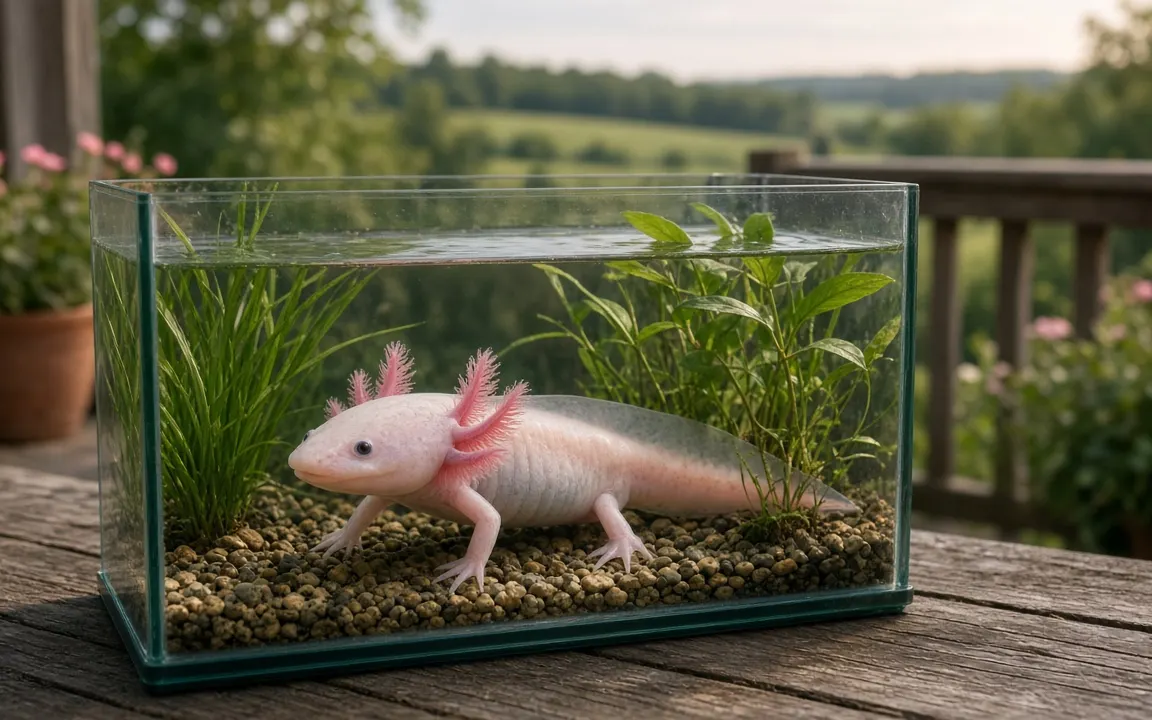
In a small community like Rosemount, a child's hedgehog or axolotl may be the only one they know of, and the loss can feel lonely for them. Involving them helps: let them choose a small item to go with their pet, decorate the box or pick where the keepsake will sit. If the cremation is done regionally and takes a week or two, tell them roughly when their pet will come home, so the wait has an end.
About 31,881 people live in Rosemount, which makes it the 31st-largest of the 67 Minnesota communities we cover. Saint Paul, roughly 14 miles off, is the closest larger centre, and a share of the providers who cover Rosemount run from there.
Rosemount sits within easy reach of Inver Grove Heights (6 miles), Apple Valley (6 miles) and Eagan (7 miles, a larger centre). A provider based in any of them will usually collect from Rosemount; ask what the mileage adds to the bill.
68.5%[1]
The NFDA projected Minnesota's cremation rate at 68.5% for 2024.
9-12 years[2]
Pet sugar gliders live about 9-12 years; adults weigh about 85-170 g.
4-6 years[3]
African pygmy hedgehogs live an average of 4-6 years; adult males weigh 400-600 g and females 300-400 g.
3-5% of body weight[4]
Embrace notes cremated remains typically weigh about 3-5% of the pet's original body weight.
If a number here surprises you, the primary material is Embrace Pet Insurance and Merck Veterinary Manual; we only apply it to this.

What local funeral customs tell you about finding a provider
In Minnesota, about 68.5%[1] of people are cremated. That places it in the middle: plenty of crematories, but not all of them used to unusual requests. Exotics vets are the best bridge, because they deal with local providers regularly and know which ones have handled small mammals, amphibians or invertebrates carefully.
Source for the Minnesota number: NFDA 2024 Cremation & Burial Report state projections (via Occasional Sage) (2024). Nobody publishes a pet cremation rate for Rosemount, so the human figure is the best local signal available.
Timing exotic pet aftercare in Rosemount's climate
For larger exotics kept outside, such as wallabies, a death in January, February, March, November and December often happens in a snowy paddock. Cold slows changes to the body but doesn't stop foxes and other scavengers, so move your animal into a shed or garage and cover it. Call a provider early in the day; rural collection in winter depends on daylight and road conditions.
There's no need to drive to a crematory on an icy day in January, February, March, November and December. A small exotic keeps in the freezer for weeks, so wait for clear roads. When you do travel, pack the body in a cool box so it stays frozen in the heated car, and keep your living animals' heating on a backup plan in case the power goes while you're out.

How much to budget in Rosemount, from gliders to wallabies
Expect the total in Rosemount to depend on four things: the weight band, individual or communal, how your pet reaches the provider and what the remains come back in. If a necropsy comes first, that's a separate vet or laboratory fee, and it adds time to the usual return of 5-10 days[5]. The ranges below are typical US prices; ask any provider for a written, itemised total before you agree.
Rather than repeat the price table on every city page, we keep one for Minnesota: Minnesota costs. What each service includes is on the services page.

Free tool
Cremation cost calculator
Estimate a realistic price range for your pet's size, location and the type of cremation.
Rules and paperwork in Minnesota
Invasive-species laws are written for living animals, but the reasoning applies after a death too. Anything from an enclosure that could carry a non-native parasite, fungus or seed, such as substrate, tank water or live plants, shouldn't be dumped outdoors. Bag it for household waste, or ask your vet. The notes for Minnesota below cover burial and scattering of your pet itself.
Minnesota keeps an official directory of local governments; use it to reach the county or city office that covers Rosemount.
The Minnesota page sets out who oversees pet cremation and what the state says about burial and scattering. Rosemount's own bylaws can sit on top of that, so ask before you dig.
A practical checklist for Rosemount keepers
- Check that they've really died. A hedgehog that has gone cold and torpid, or a tarantula flipped over mid-molt, can look gone when it isn't. Warm them slowly if there's any doubt, and ring an exotics vet before you do anything else.
- Decide what you want first: a necropsy (post-mortem), preservation or cremation only. This decides how you store the body.
- Seal your pet in a labelled bag. Note the date, the weight and what species they are. Don't add tank water for a frog or newt.
- Refrigerate for a necropsy, freeze for preservation, and use either for cremation only. Aim to reach the vet within a day or two if you want a necropsy.
- Gather paperwork: any permit, CITES certificate, breeder or purchase record.
- Call a provider with the species and weight, then ask two things: have they cremated one before, and what exactly comes back to you.
- Get the price in writing, including collection, the container and any certificate.
Memorials that suit an unusual companion
Rosemount is a growing Dakota County city about 14 miles south of Saint Paul, where new subdivisions meet open farmland. Housing ranges from the older blocks near the original downtown to newer developments on former fields, and a large tract of University of Minnesota land, known as UMore Park, sits on the east side. Aftercare providers covering the south metro generally reach Rosemount, though homes on its rural fringes may pay a distance fee.
the planning tools turn your pet's details into figures, go deeper with the guides or catch up on recent articles, or look at how readers voted in our polls, Every option Rosemount families choose between is on the services page. If you live between Rosemount and Rochester, Bloomington, Minneapolis and Brooklyn Park, either page applies. Every other community in Minnesota, and all of the United States, is listed too.

Reader polls
What would you choose?
Vote anonymously and see how other readers answered. The results are live counts from people who visit this site, so they show real opinions, not a scientific sample.
Would you want a necropsy (an animal post-mortem) before cremation?
Tap an answer to vote and see how others answered. Anonymous.
If your pet is very small, what matters most about the ashes?
Tap an answer to vote and see how others answered. Anonymous.
If you had to decide today, which aftercare would you choose for your pet?
Tap an answer to vote and see how others answered. Anonymous.

Free tools to help you plan
Cremation cost calculator
Estimate a realistic price range for your pet's size, location and the type of cremation.

Ashes weight estimator
See roughly how much ash to expect back, by species and body weight.

Aftercare options compared
Compare private, communal and water cremation with burial on cost, timing and what comes home.
Questions people ask
When is the hardest time of year to arrange a burial in Rosemount?
January, February, March, November and December: average lows are below freezing then, and frozen ground makes a home grave slow or impossible until it thaws. The other pressure point is July, when highs around 83°F mean a body needs cooling and collecting quickly.
Which nearby towns can I compare with Rosemount?
The closest communities we cover are Inver Grove Heights (about 6 miles), Apple Valley (about 6 miles) and Eagan (about 7 miles). Providers based in those places often serve Rosemount too. Ask each one for a written total that includes collection, so the distance is priced in.
Is cremation common in Minnesota?
For people, yes: about 68.5%[1] of Minnesota deaths end in cremation, according to NFDA 2024 Cremation & Burial Report state projections (via Occasional Sage) (2024). Nobody publishes the same figure for pets, but in our experience pet choices in Rosemount follow the human pattern closely, so cremation is the default most families here start from.
Will I have to travel to Saint Paul to arrange things?
Not usually. Providers based in Saint Paul (roughly 14 miles from Rosemount) collect from here as a matter of routine, and the paperwork is done by email or phone. If you want to be present for a witnessed cremation, that is when the drive matters.
How do I know I got my own pet's ashes back?
Ask how the provider keeps track of each animal. Reliable providers attach an ID disc that stays with your pet from intake to return, use a separate chamber or tray for individual cremations, and record each step. For a tiny exotic, check that only one animal is cremated at a time. A certificate that names the species and weight, not just 'pet', is another good sign.
Can I freeze-dry or preserve my pet instead of cremating?
Yes, but decide before cremation, because it needs the whole body. Freeze promptly in a sealed bag. Freeze-dry studios often take months and cost far more than cremation; one US studio charges about USD 650[7] for a pet under 1 lb. Ask for photos of the same species they've done, and whether they accept pets by courier.


Sources and our estimates
- [1] The NFDA projected Minnesota's cremation rate at 68.5% for 2024. NFDA 2024 Cremation & Burial Report state projections (via Occasional Sage), 2024.
- [2] Pet sugar gliders live about 9-12 years; adults weigh about 85-170 g. Merck Veterinary Manual - Table: Sugar Gliders at a Glance.
- [3] African pygmy hedgehogs live an average of 4-6 years; adult males weigh 400-600 g and females 300-400 g. Merck Veterinary Manual - Overview of Hedgehogs.
- [4] Embrace notes cremated remains typically weigh about 3-5% of the pet's original body weight. Embrace Pet Insurance - Bury or Cremate Your Dog? Costs, Pros & Cons, 2025.
- [5] A US aftercare guide says many families receive private cremation ashes within about one to two weeks, with 5-10 days commonly quoted. Funeral.com - Pet Cremation Timelines: How Long Until Ashes Are Returned, 2026.
- [6] Private cremation cost per pound falls with size in the US: roughly $9.2/lb for a 15 lb pet, $4.2/lb at 60 lb and about $4.0/lb at 100 lb. Our estimate: band midpoint price / representative weight: 0-30 lb (midpoint $137.50 / 15 lb) = $9.17/lb; 51-70 lb ($250 / 60 lb) = $4.17/lb; over 90 lb ($400 / ~100 lb) = $4.00/lb. How we calculate.
- [7] One U.S. pet preservation studio charges USD 650 to freeze-dry a pet under 1 lb, with a 4–6 month turnaround. Animal Family Pet — Pet Preservation Pricing & Shipping, 2026.
Tell us about your exotic pet
Tell us what you need and where you are. We'll reply by email with clear options and prices so you can decide in your own time.